Boca Catalina Aruba: Snorkelling From Shore or by Boat Tour
Snorkel Boca Catalina for the price of a bus fare or join a catamaran from US$65. What you see, how to get there and which to choose.
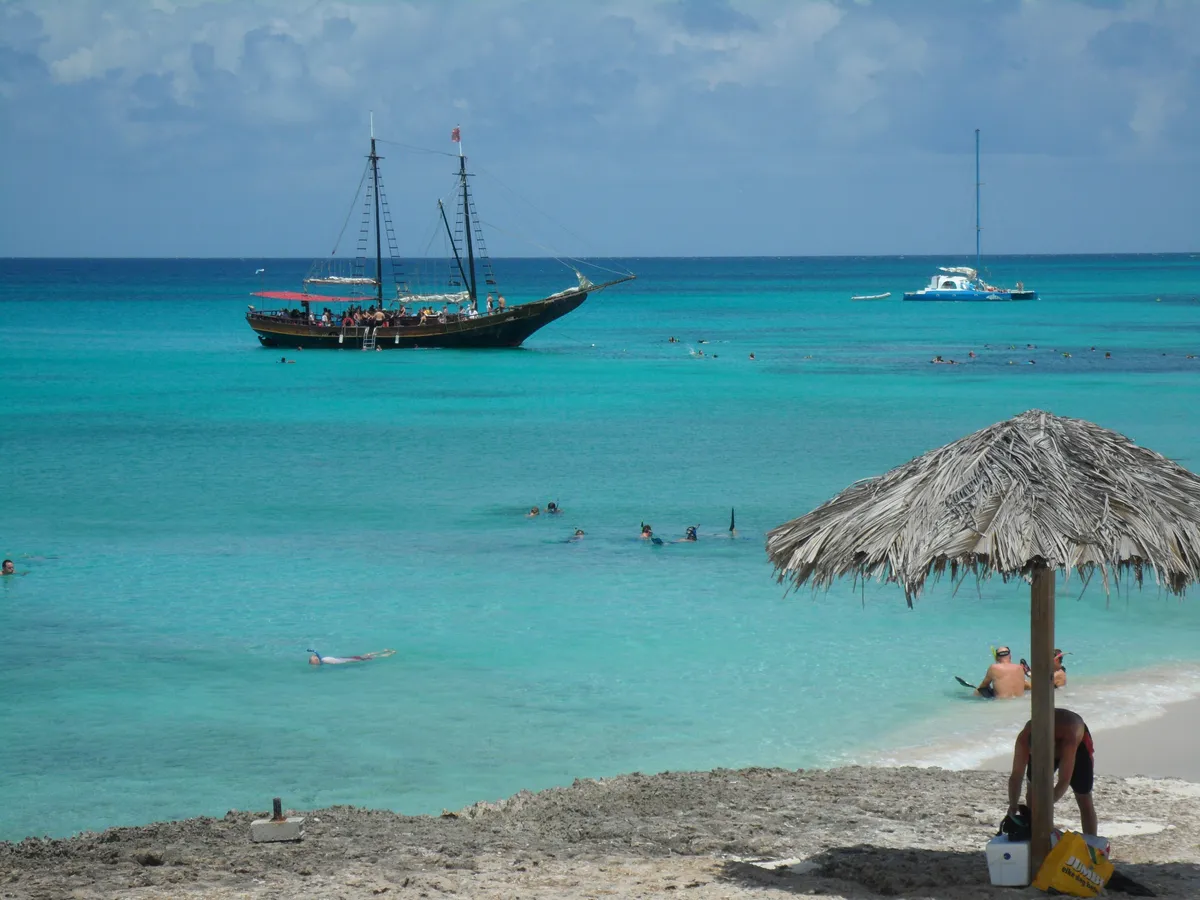
Boca Catalina is a small bay on Aruba's north-west coast where you can snorkel straight from the sand for free, or arrive on a catamaran that anchors just offshore. Going by yourself costs a bus fare and gives you the quiet early hours; a boat tour costs from about US$65 to US$99 and adds the Antilla shipwreck, which you cannot reach from the beach. This guide compares the two, with fares and tour prices checked on 16 November 2026.
Where Is Boca Catalina?
The bay sits in the Malmok area, on the coast road that runs from the Palm Beach high-rise hotels towards the California Lighthouse. The Aruba Tourism Authority puts it about five minutes by car from the Palm Beach resorts. A parking area runs alongside the road, and steps lead down to a small strip of white sand.
Three names get mixed up along this stretch:
- Boca Catalina is the sandy bay with the easiest entry.
- Catalina Cove lies just to the north. You can enter at Boca Catalina and swim there.
- Tres Trapi is a few hundred metres along the same coast and is named after the three steps cut into the rock that lead into the sea.
Malmok Beach is the longer shoreline of small coves that begins after the last high-rise hotel, and Arashi Beach is further on towards the lighthouse.
What Is at the Beach?
Very little, which is part of the appeal. There are a few simple shade huts, and independent snorkelling guides report no public toilets, no showers and no snack bar. The nearest shops and restaurants are in the hotel area, a short drive back. Access is free and no permit is needed.
Bring water, your own mask and fins, and something to cover up with. The tourism authority describes the beach as quiet on weekdays, with local families joining visitors at weekends.
What Will You See in the Water?
The entry is from sand and the bottom slopes away gradually, which makes this one of the easier snorkelling spots on the island. The tourism authority lists palometas close to shore, trunkfish and sergeant majors, with larger fish and coral further out.
Independent snorkelling reports add more detail:
- Seagrass beds lie out in front of the beach in four to six metres of water. This is where green sea turtles are most often seen.
- The rocky point at the north end is shallow, one to two metres deep, with small reef fish.
- Coral formations lie about 100 metres off that point in three to four metres of water.
- Other sightings include southern stingrays, juvenile angelfish, barracuda, snapper and grunts.
Turtles are wild and nobody can promise them. Your best chance is in the morning, before the water fills with swimmers. Visibility is usually good, with a dive guide giving 10 to 30 metres.
How Do You Get There Without a Tour?
By bus
Arubus Line 10A runs from the main station in Oranjestad through Eagle Beach and Palm Beach to Arashi, passing along the Malmok coast. Arubus lists it as a daytime service. Its timetable shows a bus about every 20 minutes on weekdays, from about 6:15 to 18:10, and about one an hour at weekends. Its published fares are:
| Ticket | Price |
|---|---|
| Single trip | US$2.60 (AWG 4.50) |
| Retour card, two trips | US$5.00 (AWG 8.75) |
| Day pass | US$15.00 |
Cash is accepted on board. Ask the driver for the Boca Catalina or Malmok stop, and check the time of the last bus back before you get in the water, because the last daytime departures are around 18:00. Cruise passengers can board at the main bus station opposite the terminal. Our getting around Aruba guide covers the network in more detail.
By taxi
Aruba's taxis charge government-set fares, not metered ones. A new tariff took effect on 20 May 2026, with a minimum fare of US$10 and a US$5 surcharge, charged once per trip, late at night, on Sundays and on public holidays. Every taxi must display a QR code that links to the official calculator at taxi.aw, so you can check the fare for your exact route before you set off.
By car
Follow the coast road north from Palm Beach towards the lighthouse and look for the signed parking area on the sea side. Do not leave anything in the car while you swim. That is standard advice at every beach car park in Aruba.
What Do the Boat Tours Offer?
Most of the catamarans and sailing ships that leave from Palm Beach stop at Boca Catalina or the reef beside it. Prices below are the "from" rates published on each operator's own website in November 2026.
| Operator and trip | Length | From | What is included |
|---|---|---|---|
| Jolly Pirates, morning | 4 hours | US$99 | Three snorkel stops, barbecue lunch, open bar |
| Jolly Pirates, afternoon | 3 hours | US$79 | Two snorkel stops, open bar |
| De Palm, morning snorkel | 4 hours | US$99 | Antilla, Boca Catalina and Malmok; lunch, open bar |
| Pelican Adventures, afternoon sail | 2.5 hours | US$70 | Two snorkel stops |
| Pelican Adventures, brunch cruise | 4 hours | US$99 | Three stops, including a Second World War wreck |
| De Palm, afternoon snorkel | 3 hours | US$65 | Two snorkel stops, open bar |
Jolly Pirates names its three sites as Malmok, the Boca Catalina reefs and the Antilla wreck. Operators choose stops on the day according to wind and sea, so if a particular site matters to you, ask before you book. See our snorkel sail cruise page for what a typical trip involves.
Why Does the Antilla Wreck Matter?
It is the main thing a tour gives you that the shore cannot. The SS Antilla was a German freighter, about 121 metres long, completed in 1939. Her crew scuttled her in Malmok Bay on 10 May 1940, the day Germany invaded the Netherlands, as Dutch marines moved to seize the ship.
The wreck lies on its side several hundred metres offshore in 16 to 18 metres of water, and its highest parts come within a few metres of the surface. That is why snorkellers can see it from above while divers explore it below. It is reached by boat only. Our Antilla shipwreck page has more on diving it.
Shore or Tour: Which Should You Choose?
| From shore | By boat tour | |
|---|---|---|
| Cost per person | US$5 return by bus, plus your own gear | From US$65 to US$99 |
| Time in the water | As long as you like | A set stop at each site |
| Best hours | Early morning, before the boats arrive | Fixed morning or afternoon departures |
| Antilla wreck | No | Yes, on many trips; check the route |
| Gear, drinks, food | Bring everything | Included |
| Help in the water | None; do not count on a lifeguard | Crew on board; ask about life vests when you book |
Go from shore if you are a confident swimmer, have your own mask and want time with the turtles without a schedule. It also suits anyone staying on a budget.
Take a tour if you want to see the Antilla, are new to snorkelling, or want the sail, lunch and open bar as part of the day.
Many visitors do both: a boat trip once for the wreck, then a couple of early mornings at the bay on their own.
What Are the Rules and Risks?
- Boat traffic. This is the main hazard. Tour boats and pleasure craft move along this coast all day, and much of the coral lies beyond the buoy line that marks the swimming area. Stay inside the buoys unless you are towing a surface marker, and look up often.
- Sunscreen. Aruba prohibits the import and sale of sunscreen that contains oxybenzone. The law was approved in November 2019 and enforced from July 2020. Bring or buy a formula without it.
- Wildlife. Keep at least two metres from turtles and do not chase or touch them, or the rays and sea stars. Do not stand on coral or seagrass, and do not feed the fish.
- Souvenirs. Taking shells, sand or coral off the island is illegal.
- Underfoot. The entry at Boca Catalina is sand, but the neighbouring coves have sharp rock and sea urchins. Fins or water shoes help.
- Protection status. This coast is not inside one of the four reserves of Aruba's marine park, which lie elsewhere around the island. The reef here depends on visitors behaving well.
How Does It Compare With Nearby Spots?
- Tres Trapi: rock steps straight into the sea. Fewer fish, but known for sea stars on the sandy bottom.
- Malmok: more fish variety along the rocks, with a trickier entry and many urchins.
- Arashi: shallow, sandy and good for beginners, with a large car park. Do not count on renting gear there.
- Mangel Halto: on the sheltered south coast near Savaneta, inside a marine reserve. Calm mangrove shallows, then a reef with strong currents outside. Not for weak swimmers.
For the full picture, see our Aruba snorkelling and diving guide.
Frequently Asked Questions
Is Boca Catalina free?
Yes. It is a public beach with free access and a roadside parking area. No permit is needed to snorkel.
Can you snorkel at Boca Catalina from the beach?
Yes. You walk in from sand, and fish are visible close to shore. Seagrass beds and coral lie about 100 metres out.
Are there turtles at Boca Catalina?
Green sea turtles feed on the seagrass and are often seen, most reliably in the morning. Sightings are never guaranteed.
Is there a bus to Boca Catalina?
Arubus Line 10A runs from Oranjestad through Palm Beach to Arashi along this coast. A single trip costs US$2.60.
Can you swim to the Antilla wreck from Boca Catalina?
No. The wreck lies several hundred metres offshore in an area used by boats. Visit it on a boat tour.
Are there toilets or food at Boca Catalina?
No public toilets, showers or snack bars are reported at the beach. Bring water and use the facilities in the hotel area first.
What is the best time to snorkel at Boca Catalina?
Early morning on a weekday. The water is calmer, the beach is quiet and the tour boats have not yet arrived.
About the author
Alex Borshch
Keep reading
Related articles
Get On The Newsletter Waitlist
The Aruba 365 newsletter has not launched yet. Leave your email to be told when it does. No mail app required.