Best Time to Visit Aruba: Month by Month
Aruba's weather barely changes across twelve months, so picking the right time to go really comes down to price, crowds, and wind. Here is the month-by-month breakdown that actually matters.
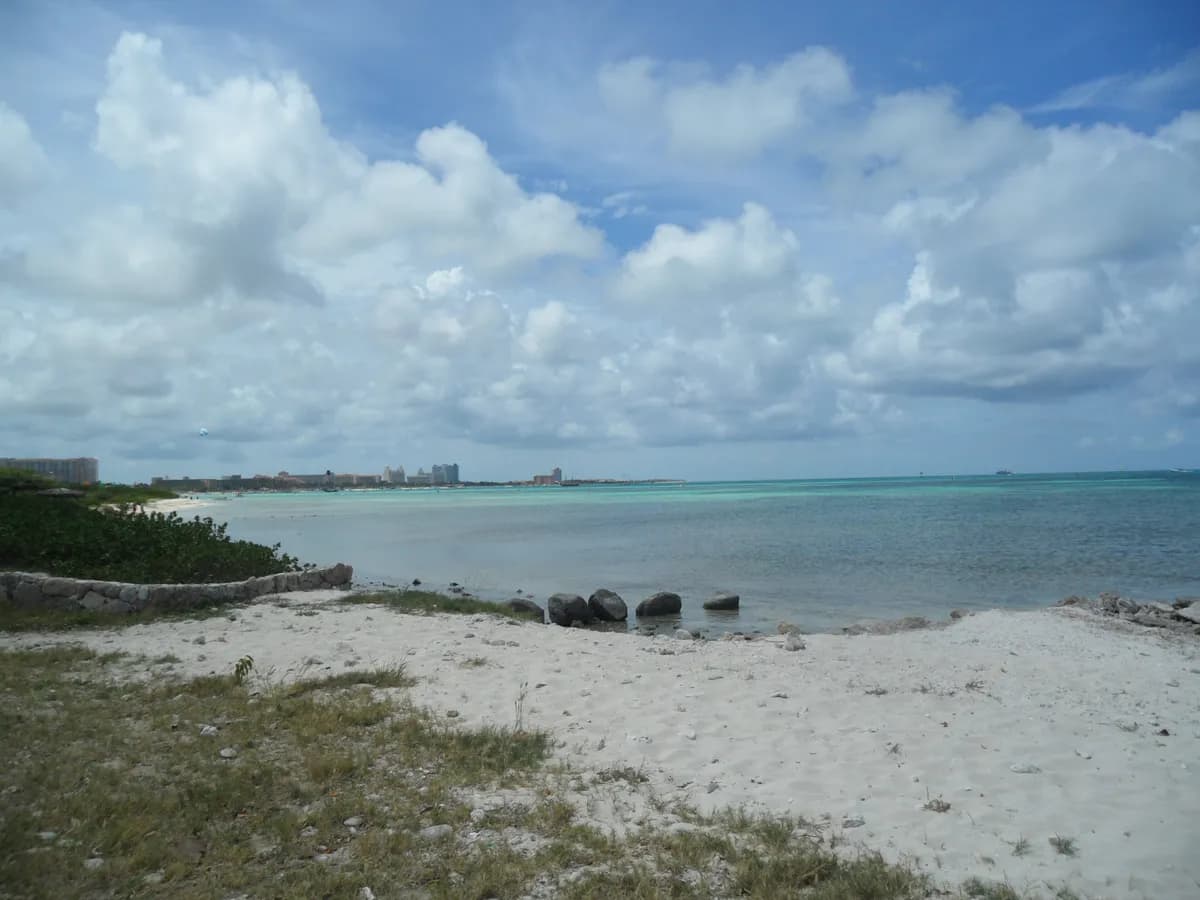
The short answer: there is no bad month to visit Aruba. Average highs stay between 85 and 90°F (29 to 32°C) across all twelve months, sunshine is close to guaranteed, and the island lies far enough south to sit out the Atlantic hurricane season almost entirely. So the real planning question isn't "will the weather be good," it's "how much do I want to pay and how many people do I want to share the beach with."
That reframes the calendar. Mid-December through mid-April is Aruba's high season, when hotel rates peak and rooms need booking well ahead. From mid-April through mid-December, prices drop, with the deepest discounts landing in September and October. Add in Carnival (January and February), the best kitesurfing stretch (roughly December through August), and a rainy season that's more short showers than washed-out days (September through January), and you can pick a month that fits your budget and your idea of a good time.
Why Aruba's forecast barely changes
Aruba sits at about 12.5°N latitude, roughly 15 to 18 miles (25 to 29 km) north of Venezuela's Paraguana Peninsula, well south of the paths most Atlantic hurricanes travel. According to the Atlantic hurricane database going back to 1851, Aruba has never taken a direct hurricane hit. That single fact explains the island's tourism pitch better than any beach photo: consistency. Temperatures barely move across twelve months, rain is genuinely scarce for a Caribbean island, and the trade winds that keep the heat bearable blow nearly all year.
Month-by-month: temperature, rain, and wind
Air temperatures run roughly 80 to 90°F (27 to 32°C) all year. January is the coolest month, with an average high near 85°F (29°C), a low near 77°F (25°C), and a daily mean around 81°F (27°C). August and September are the hottest, with average highs near 90°F (32°C). Rain is concentrated October through December, within Aruba's broader September-through-January rainy season, and even then it typically arrives as short, intermittent bursts rather than all-day rain. March and April are the driest months of the year.
| Month | Typical conditions | Crowds and price |
|---|---|---|
| January | Coolest month (high ~85°F/29°C); Carnival season underway | Peak season, high prices |
| February | Dry conditions; steady trade winds | Peak season; the 2026 Grand Parades fell mid-month |
| March | Driest stretch begins; turtle nesting season begins | Peak season through mid-April |
| April | Warm, dry, steady wind | Peak pricing through mid-month, then low season begins |
| May | Warming up; Hi-Winds watersports festival | Low season, better rates |
| June | Windiest month of the year; hurricane season begins June 1 | Low season |
| July | Hot, windy, dry | Low season, some summer family travel |
| August | Among the hottest months (high ~90°F/32°C) | Low season |
| September | Hottest alongside August; sea at its warmest | Low season, deepest discounts begin |
| October | Rainy season; winds ease toward November's annual low; still sunny most days | Deepest hotel discounts of the year |
| November | Typically the wettest month; sea still warm | Low season; Carnival season officially begins November 11 |
| December | Rainy season continues; the consistent kitesurfing wind window begins | Low season until mid-month, then peak pricing for Christmas and New Year |
Hurricane season: why Aruba is the exception
The official Atlantic hurricane season runs June 1 through November 30, the reason many Caribbean destinations get quietly crossed off travel lists for half the year. Aruba is the exception worth knowing about. Physiographically, the chain of islands running from Margarita Island to Aruba off the Venezuelan coast sits on the South American continental shelf rather than in the main Caribbean hurricane arc, and that geography, combined with the island's low latitude, keeps direct hits essentially unknown.
The closest calls on record show how rare a real threat is. Hurricane Janet, one of the strongest Atlantic hurricanes ever recorded, skirted the ABC islands to the north on September 24 and 25, 1955. Aruba saw gusts peak at 50 mph (80 km/h) and some uprooted trees, but nothing close to hurricane-force damage. Hurricane Felix in 2007 became the first storm in over a hundred years to bring its center within roughly 80 km of Aruba, delivering rough seas and strong wind but no serious destruction. During hurricane season, the more likely effect is indirect: a bump in rainfall, gustier days, or occasionally a dead calm that makes the heat feel more intense. If you're weighing Eagle Beach against Palm Beach for a June or September trip, weather risk shouldn't be the deciding factor.
The driest island in the Caribbean
Aruba's average annual rainfall is only about 18 inches (roughly 450 to 457 mm), among the lowest of any Caribbean island. It's not alone: Aruba, Bonaire, and Curacao, the Dutch ABC islands, are collectively the driest in the region, with Aruba around 450 mm, Bonaire around 465 mm, and Curacao slightly wetter than both. Within Aruba's own calendar, October through December bring the bulk of the year's rain, each month averaging roughly 75 to 100+ mm, with November usually edging out October as the single wettest month (some datasets flip the order). February and March sit at the other extreme, averaging only 19.5 mm and 10.0 mm respectively. Aruba's tourism board also claims the island gets more sunny days than any other in the Caribbean, including neighboring Bonaire and Curacao, a claim worth taking as marketing but one that lines up with the rainfall numbers.
Wind: what it means for the beach and the kitesurfers
Trade winds blow across Aruba nearly year-round and matter more to comfort than most first-time visitors expect: they're what makes a 90°F day on Eagle Beach feel manageable rather than oppressive. The strongest winds generally arrive from May through July, with a calmer stretch from September through November. June is the windiest month (averaging about 21.2 mph), while November is the calmest (5.6 m/s). Wind blows predominantly from the east all year.
For kitesurfers and windsurfers, this makes Aruba close to a year-round destination. Local schools consider December through August the most consistent stretch (typical conditions of 15 to 30-plus knots), and the general view on the island is that there's no genuinely bad season for the sport. Aruba has earned the nickname "Windy Paradise" for this reason: trade winds deliver 18 to 25 knots most days. Even the calmer window from September through November, which overlaps the rainy season, still averages roughly 10 to 18 knots, enough for larger kites or foil boards. If your trip centers on kitesurfing at Boca Grandi or windsurfing at Fisherman's Huts, consider timing it to Hi-Winds. The 2026 edition, the 38th, runs May 13 through 18 at Fisherman's Huts (also known as Hadicurari or Sarah-Quita Beach), free for spectators across seven disciplines. It has held a consistent May slot in recent years, running May 28 to June 2 in 2025 and May 8 to 13 in 2024.
Sea temperature tracks a gentler curve than air temperature: 26 to 28.5°C (79 to 83°F) year-round, coolest from January through March (around 26°C/79°F) and warmest from September through November (around 28 to 28.5°C/83°F), the same stretch when wind eases off. Warm water and lighter chop are part of why late September and October appeal to swimmers and snorkelers despite technically being rainy season.
Carnival season: January and February
If nightlife and street culture matter as much as beach time, build the trip around Carnival. The 2026 season, the 72nd edition, opened with the Carnival Opening (Kana Kibra) on November 11, 2025, with parades and events concentrated in January and February 2026 and the 2026 schedule marking its close with the burning of King Momo after the February 15 Grand Parade. Key 2026 dates: the Grand Children's Parade in Oranjestad on February 1; the Grand Lighting Parade (Parada di Luz) in Oranjestad on the evening of February 7, with Jouvert Morning in San Nicolas earlier that same day; the San Nicolas Grand Carnival Parade on February 14; and the Oranjestad Grand Carnival Parade on February 15, followed that evening by the Burning of Momo farewell ceremony. Ash Wednesday fell on February 18, 2026. Confirm the current year's schedule before booking, since dates shift annually with the church calendar, but expect the same general window: an autumn opening and a January-to-February run of parades ending around Ash Wednesday. San Nicolas and Oranjestad, the capital, each host their own Grand Parade and anchor the season's events.
Worth knowing if you've visited before: the Soul Beach Music Festival, an Aruba fixture for about 22 years, has relocated to Curacao as of 2026, running May 20-25 in Downtown Willemstad, Rif Fort, and Mambo Beach. It's no longer an Aruba event, so don't plan a Memorial Day trip (May 25, 2026) expecting it on the island.
The value window: September and October
If price drives the decision, the calendar is straightforward. High season runs mid-December through mid-April, when hotel prices peak and rooms should be booked well ahead. Low season runs mid-April through mid-December, with the best deals in late summer and September. September through early November is the cheapest stretch outright, with discounts available at some hotels. September and October see the deepest cuts, up to roughly 50% at some properties, while Christmas and New Year's week is the most expensive time of year to book.
The trade-off is honest: September and October fall inside the rainy season, so expect more short, passing showers than in February or March. Wind is at its calmest (good for flat-water swimming), sea temperature is at its warmest, and hotel rates at some properties are cut by close to half. For travelers who don't need bone-dry skies and don't mind skipping Carnival, late September through October is the best-value stretch on Aruba's calendar, not a compromise choice.
Other things the calendar affects
Sea turtle nesting season runs March through December, with four species (Leatherback, Hawksbill, Green, and Loggerhead) nesting on Aruba's beaches; Eagle Beach is one of the primary sites. The nonprofit Turtugaruba, founded in 2003 and affiliated with the regional WIDECAST network, monitors the nests with volunteers and reports protecting an average of around 6,700 hatchlings a year, with the full season (nesting through hatching) running March into December. Keep a respectful distance from any roped-off nests.
March also brings Aruba's National Anthem and Flag Day on March 18, marking the 1948 petition for autonomy presented by Aruban leader Shon A. Eman and first celebrated as a national holiday in 1976. It's a quieter, more local event than Carnival, worth catching if you want to see the island mark its own history.
So, when should you actually go
Pick the month based on what you're optimizing for. Want Carnival and don't mind peak prices: January or February. Want to windsurf or kitesurf at full strength: anytime December through August, with June as the windiest month and Hi-Winds in May as a natural anchor. Want the best value with warm seas and manageable rain: late September through October. Want a family trip in the US summer break with lighter crowds than winter: July or August, accepting the hottest temperatures. The weather itself offers no wrong answer; what remains is a trade between price, crowds, and which festival or activity anchors the trip. For beach specifics, see how Eagle Beach compares to Palm Beach, or look into a day trip to Arikok National Park's natural pool. Browse the full range of Aruba destinations, beaches, and activities to build out the rest of the trip.
Facts on this page were last compared with their sources on . Details may have changed since. How we check
About the author
Alex Borshch
Get On The Newsletter Waitlist
The Aruba 365 newsletter has not launched yet. Leave your email to be told when it does. No mail app required.